| | 
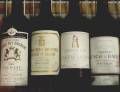 The red wines of Bordeaux are noted for their unique ability to age in bottle and improve over a period of many years. However this does not generally apply to the generic wines or small Chateaux which are usually ready to drink between 3 - 5 years after the vintage and will seldom improve much after that. The red wines of Bordeaux are noted for their unique ability to age in bottle and improve over a period of many years. However this does not generally apply to the generic wines or small Chateaux which are usually ready to drink between 3 - 5 years after the vintage and will seldom improve much after that.
For the finest eighty to a hundred Chateau in the Medoc, Graves, St. Emilion and Pomerol, the ageing process can take 6 - 8 years in a good year, 10 - 12 years for a great year, and 15 - 20 years for an exceptional year, such as 1945, 1961 and 1982. On reaching their peak, these wines can offer a depth of flavour, bouquet and a balanced richness of fruit that is unsurpassed in the world.
Recent Vintages:
2003
There is no question that some clarets of spectacular quality have been made in 2003, but watch out as the vintage was uneven because many wines were wrecked by the heatwave. The modest size of the crop (down one-third on 2002) also disqualifies it from being a classic in several experts' eyes....."2003 will certainly go down in history as an extraordinary vintage, although I'm not sure whether it can claim to be a great one yet," says Amanda Skinner, managing director of John Armit Wines. ...."However, 1961 was a similarly small and uneven vintage, thanks to severe spring frosts, and that year is now regarded as one of the classics of the 20th century...."The searing heat of last summer had a dramatic effect on the vineyards of Bordeaux. Properties with water-retaining clay soils coped most successfully with the high temperatures, as did those near the river, thanks to underground water reserves and cooling river mists. Vineyards with older vines also flourished because the vines' deeper roots took advantage of the water table that was at a high level after the rainy winter. The late-ripening Cabernet Sauvignon did well, with early September showers giving an extra boost to the grapes before harvesting. Vineyards in drier soils suffered, as did properties with younger, less robust vines and those that grow Merlot, an early ripening grape that was scorched and dehydrated before the reviving rain could rescue it. The basic rule seems to be that the further north one travels from Bordeaux (towards cooler temperatures and an increasing proportion of Cabernet Sauvignon), the better the wines. The châteaux of Margaux, St Julien, Pauillac and St Estèphe did especially well, while the Merlot-based wines of St Emilion and Pomerol on the right bank of the river were less successful overall. But it is dangerous to generalise because there are 11 St Emilion estates represented in the top 25 wines chosen by Robert Parker, the American wine guru. Those châteaux situated on the clay plateau, such as Trottevieille, Canon La Gaffelière and Clos Fourtet, do best of all. The satellite areas of Fronsac and Côtes de Bourg have also produced some fine wines and it is being seen as a rip-roaring year for the dessert wines of Sauternes-Barsac.David Roberts, Master of Wine at Lay & Wheeler, says: "It was a remarkable vintage, the like of which I doubt we'll see again. August was the hottest ever and at Château Palmer they recorded 28 days over 25C (77F), 10 of which were over 35C (95F). I have never seen such high levels of tannin, and ripe tannins, too. The best wines are well-structured, ripe, robust and with an amazing volume of fruit. But they are wines for the patient, because the finest will keep for 30 years and beyond
2000 An exceptional vintage and certainly one of the very best of the last fifty years. Perfect growing conditions meant that this was a very even year, with outstanding results achieved in all the different regions of Bordeaux. The wines have great depth of fruit, richness, structure and ripe sweet tannins. Truly a millenium vintage!
1999 This was quite a difficult and uneven vintage with rain at harvest time and a lack of ripeness in some grapes. It was also quite a large crop of relatively inexpensive wines. The most successful Chateau produced wines with good fruit and an easy charm, that means they will not need too much keeping, before becoming quite appealing to drink.
1998 This was a vintage of two parts which produced outstanding wines in Pomerol and St. Emilion, the best since 1990, and excellent wines in the Graves. The Medoc though was less fortunate and there was a lack of ripeness in the Cabernet Sauvignon grapes leading to high tannin. This has softened slightly with time, but being somewhat similar in style to the 1988s, the best wines will need several years to mature.
1997 Not considered a really top quality vintage, but it is a year that will produce very appealing, soft wines that will mature early and which can be enjoyed before the 1995s and 1996s reach full maturity.
1996 Another excellent vintage to follow 1995. This was a very large crop which should produce classic Cabernet based Clarets, probably similar to 1986 in style, and certainly wines to wait for. Much more successful in the Medoc, than on the Right Bank.
1995 A large crop and the best vintage since 1990. Probably quite similar in style to 1985 with soft appealing wines that have a sweetish ripe fruit character. The best results were achieved in Pomerol and the northern Medoc.
1994 Weather conditions up until the time of the vintage were perfect, but some rain during the harvest period helped to dilute what could have been an exceptional vintage. The Merlot grapes were particularly ripe and the best results will probably be in Pomerol, St. Emilion, and with the dry white wines from Graves. Appealing wines that could reach maturity ahead of the 1993s.
1993 A promising vintage was spoiled by the wettest September in thirty years. However the condition of the grapes was very healthy and many good wines were produced. Selection and low yields were very important and the early ripening Merlot grape produced the best results. A good year but one where modern wine making techniques and equipment were an essential part of the equation.
1990 A very large crop of excellent wines in this the third in a trilogy of great Bordeaux vintages: A hot summer ensured grapes of great ripeness. The wines are rich and opulent with lovely fruit and with a style that will enable them to age well but which will also ensure they have great appeal when still relatively young, rather like 1982 and 1985. As with 1989, this vintage was particularly successful in St. Emilion and Pomerol.
1989 Following one of the warmest and driest summers since the last war, this large crop was the earliest vintage in Bordeaux for almost a century. The 1989s are wines of great ripeness power and structure. They will age well but as with the 1990s they will be appealing when still quite young, and both these vintages can be drunk before the 1988s. In particular, the wines of Pomerol and St. Emilion are outstanding. Very successful in Pauillac, St. Estephe and St. Julien less so in the southern Medoc and Graves.
1988 This was the first of three outstanding and consecutive vintages that helped to ensure that the 1980s were the greatest decade for Bordeaux in this century. The 1988s are classic Clarets and are the result of a warm but not excessively hot summer and a harvest that took place under perfect weather condition. The best wines have great complexity and length. They are powerful but balanced with plenty of ripe tannin to ensure a long maturation. The top Chateaux will need a least 3 ?4 years to develop.
1986 This was the largest crop of Red Bordeaux ever produced. In spite of this the Medoc produced exceptional wines with depth and power, and enough tannin to suggest that they will be slow to mature and wines to wait for. The 1988s and 1989s will probably reach maturity sooner. A classic Bordeaux vintage.
1985 A large crop of excellent wines which benefited from the driest September ever recorded, followed by a warm and dry October. This was very much a Merlot year which has resulted in wines of richness and concentration with an abundance of fruit and ripeness. They will age well but many are already lovely to drink now.
1983 This represented Bordeaux's second consecutive top quality vintage. Perfect weather from mid September ensured that the wines were deep in colour and rich in fruit. More classic Clarets than the 1982s, they will mature more slowly. Careful selection was needed as some wines have an excess of dry tannins.
1982 Following a dry summer and hot September, the vintage started early and produced a very large crop of superbly ripe grapes, 1982 is generally considered to be the finest vintage since 1961 and possibly since 1947. The wines have tremendous power and colour and a concentration of rich fruit balanced by sufficient tannin and acidity to ensure a long maturation well into the end of the decade. Not all Chateaux were successful as the tremendous size of the crop and the exceptional heat during the vintage period meant problems with the vinification at some properties.
Older Vintages:
Below are some of the older vintages that are still drinking well:
1966 This is a classic vintage with good old fashioned concentrated wines.
1964 The Pomerols and St. Emilions are still absolutely superb.
1962 Athough without the body and flavour of 1966 wines these are fine classics.
1961 These are truly outstanding wines.
1959 The wines have a roasted character and some rival those of 1961.
1955 Some of these wines are still remarkedly fresh and solid; & getting better with age.
| |