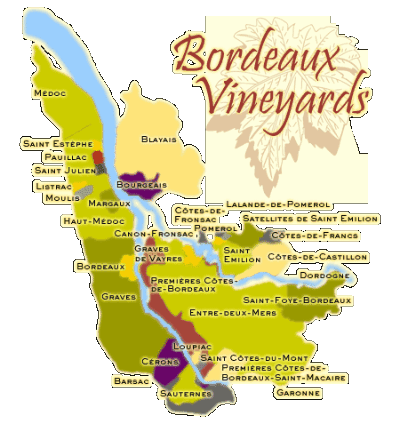
 It is always interesting to learn what actually happens in the vineyards throughout the year. We have therefore produced a simple 'Vineyard Calendar' that tells you month by month what activities usually occur, and why. We hope that you enjoy the reading and that it will help in your 'Journey through the World of Claret.' It is always interesting to learn what actually happens in the vineyards throughout the year. We have therefore produced a simple 'Vineyard Calendar' that tells you month by month what activities usually occur, and why. We hope that you enjoy the reading and that it will help in your 'Journey through the World of Claret.'
JANUARY
The work of the taille (pruning), which started in December, continues. New stakes are put in place and made secure. The pruned canes are then attached to the vines.
FEBRUARY
During this month the pruning continues, along with the general clearing of the vineyard & the gathering of the bundled canes. The vines are also given their first treatment against: Excoriose (a fungus that attacks the wood); Esca (a fungus that is also called black measles) & the Red and Yellow Spider (which will later on attack the young leaves).
MARCH
The first buds will normally break out between the 20th and 30th of this month. Also the first ploughing begins to remove the earth from around the base of the vines in order to aerate following the winter months.
APRIL
Spring arrives! And any dead vines are replaced and the first hoeing begins. The vines may be dusted with sulphur to protect against oidium and sprayed with a copper sulphate solution to guard against mildew.
MAY
The work that begun in April will continue according to the weather conditions. So will the treatments against possible disease. The first pinching back of the young shoots is performed in order to limit the growth on the vine and to encourage it towards the production of grapes. Any stray shoot around the base of the vine are cut back.
JUNE
June is classically the month when flowering begins. It normally occurs between the 2nd and the 10th of the month. This will give a guide to the approximate timing for the vintage, which normally occurs 100 to 110 days after flowering. At this time ploughing continues, the new shoots are tied up; and the length of the new growth permits it to be trained between the 2nd and the 3rd row of wires -- though not attached to them.
JULY
The soil is now ploughed away from the vines again so that there is a mound of soil running between each row of vines. The weeds are also hoed. Treatment will also continue according to the conditions. In late July, the Veraison can begin -- this is the changing of the colour of the grapes, which is the most important indication of ripening between the flowering and the vintage. If the potential crop appears to be too large then this is the usual time to thin out (ventange vert).
AUGUST
This is a quiet time when many owners go on holiday. This can nevertheless be a crucial time for treating the vines, especially against premature rot if the conditions become damp and humid. If the veraison has not yet occurred in July then it will happen in the first week of August. At this time leaf thinning can assist in the ripening process.
SEPTEMBER
This is the preferred month for beginning the harvest. In the weeks before the harvest the last preventative treatments are carried out.
OCTOBER
The month of the harvest! This is also called the Vintage or the Recolte. This is the key month in the viticultural calendar.
NOVEMBER
The harvest is over and the plough returns to the vineyard to earth up the vines for the winter. At this time manuring will also occur.
DECEMBER
The pruning begins and the first of the foliage is cut back to make the pruning easier. The cuttings are bundled up and burnt. Also any vines that have been damaged or have died during the year are noted for replacement next year...... and at this stage we retire to the warmth of an open fire and enjoy a warming & well earned glass of Calvados!
|